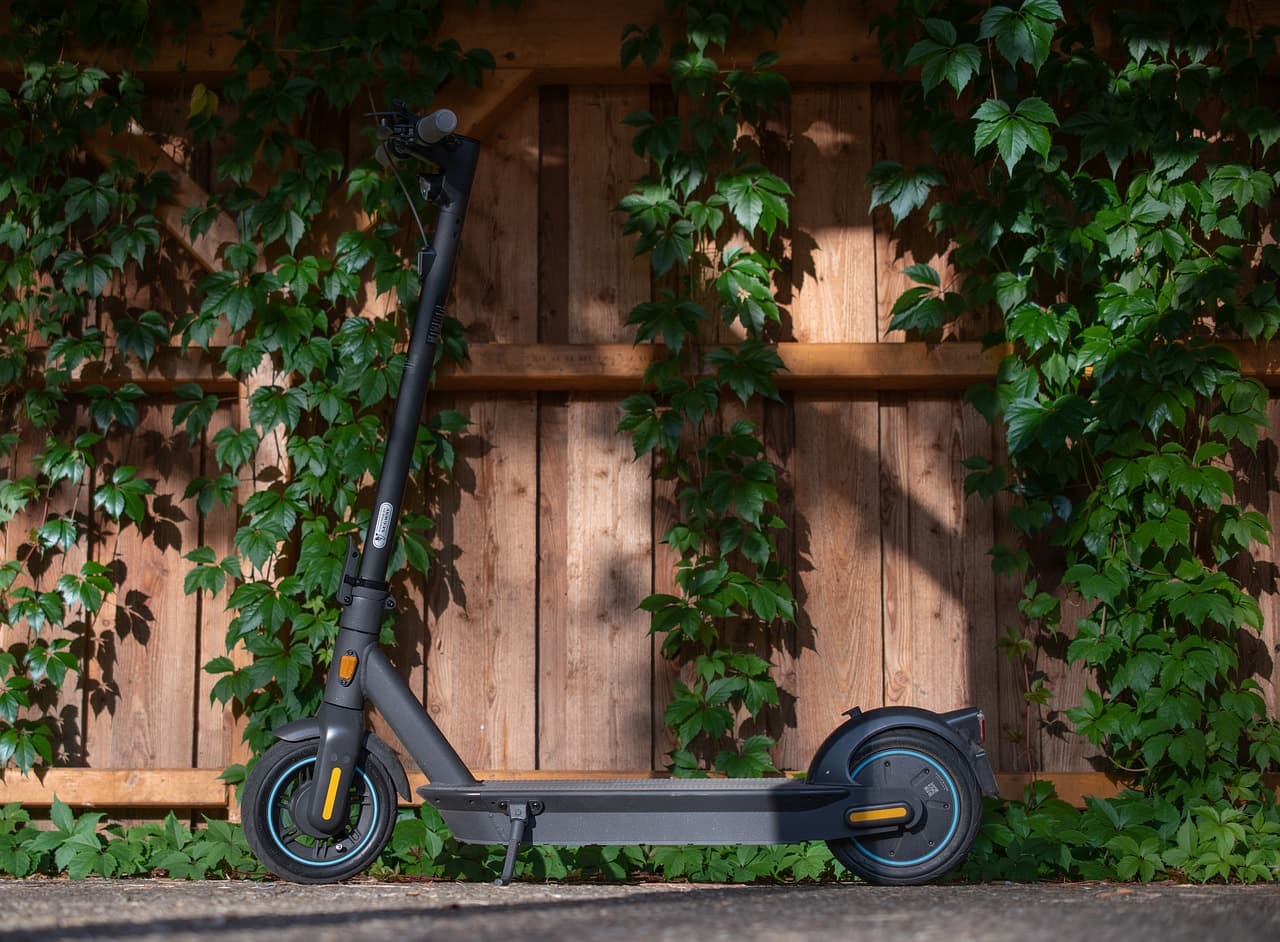
Ask a trauma team to rank mechanisms of injury by threat, and the stand-up electric scooter would probably land near the bottom. It is a small vehicle; on UK trial machines the speed is capped at 15.5 mph [1]; and its rider could, in principle, simply step off. That intuition is understandable. On the evidence now accumulating, it is also misleading in a specific and clinically important way. The scooter may be slow. The rider’s head, pitched forward over the handlebar towards a kerb or the carriageway, is not.
Last week, the American College of Surgeons Clinical Congress in Washington (26 to 29 September) heard two national analyses of e-scooter injury [2]. Read alongside British registry work published in Scientific Reports in August [3] and the Department for Transport’s final casualty figures for 2025 [4], they make a case that anyone who leads a primary survey should hear. E-scooter trauma has a distinctive anatomical signature, the head sits at its centre, and the mechanism-based rules of thumb most of us carry were not built for it. What follows sets out what the data show, where they are weaker than the headlines suggest, the strongest case against alarm, and what it means for practice and for the exam.
What Washington heard
The first study, from Howard University Hospital, analysed US national trauma data for 2021 to 2023, the first years in which a standardised ICD-10 code made e-scooter injuries reliably countable. Across 10,151 admissions, annual numbers rose from 2,311 to 4,430, an increase of 92 per cent [2]. Most injuries were minor or moderate, but 16.2 per cent of patients needed intensive care and 11.3 per cent underwent an operation. Helmet use was documented in only 12.1 per cent. On multivariable analysis, intensive care admission was more likely in patients under 18 or aged 65 and over, in those who were tachycardic, and in those with moderate or severe impairment on the Glasgow Coma Scale [2].
The second, from Mass General Brigham for Children, used the National Electronic Injury Surveillance System to study 2,185 riders aged 18 or under [2]. Children younger than 16 sustained major injuries more often than older adolescents (65.6 versus 53.7 per cent), even though they reported travelling more slowly (an average of 17.6 versus 20.3 mph). After adjustment, older age was associated with 58 per cent lower odds of major injury. The senior author’s gloss was that a child’s developing body, more than the speed of the scooter, seems to determine how badly they are hurt [2].
Two cautions apply. Both are conference abstracts that, as the College notes, have been selected by a programme committee but not yet peer reviewed [2]. And ‘reported speed’ in a surveillance database is only as reliable as a shaken teenager’s recollection. Even so, the direction of travel matches a larger body of evidence, including our own.
The British picture
In Britain, privately owned e-scooters cannot legally be ridden on public roads, pavements or cycle lanes. Only rental machines in government trial areas may be used there, by riders holding a full or provisional driving licence [1], and the trials have been extended to May 2028 [3]. Yet the Department for Transport estimates that most e-scooters in police-reported collisions are private: 949 of 1,299 in 2023 [4]. Its final 2025 figures record 1,477 casualties in collisions involving e-scooters, of whom 1,162 were riders. Ten riders were killed, up from six in 2024, and an estimated 484 people were seriously injured. Among police forces using injury-based reporting, ‘severe head injury and unconscious’ was the sixth most frequently recorded injury [4].
These numbers are almost certainly too low. E-scooters have no vehicle category of their own in the STATS19 police system and must be identified from free text [4], and comparison with hospital data suggests that police records capture fewer than one in ten serious e-scooter injuries [3].
The more clinically informative source is the National Major Trauma Registry. Kungwengwe and colleagues analysed 15,247 registry patients injured on e-scooters, motorcycles and pedal cycles in England and Wales between 2020 and 2022, alongside operator data covering more than 33 million rental rides [3]. Among adults, the e-scooter injury profile was weighted heavily towards the brain: the adjusted relative risk of traumatic brain injury was 3.45 compared with motorcyclists and 1.74 compared with cyclists, and brain injury accounted for more than a third of adult e-scooter injuries. Children made up 16.2 per cent of e-scooter injuries, compared with 6.2 per cent for motorcycles and 8.9 per cent for pedal cycles. Because rental schemes require a driving licence, children below licensing age who appear in these figures were, almost by definition, riding private machines. Only 5.9 per cent of injured e-scooter riders were documented as wearing a helmet, against 75.7 per cent of motorcyclists and 45.0 per cent of cyclists [3].
Reading the numbers properly
These results are already being paraphrased as ‘e-scooters are three times worse for your brain than motorbikes’. That is not what the study shows.
First, the relative risks are compositional. The authors state plainly that they describe how injuries are distributed among patients who reached the registry, not the risk of injury per rider or per mile travelled [3]. A motorcyclist is far more likely to be injured at speeds that break femurs and pelvises; the e-scooter rider who reaches a major trauma centre is, by comparison, more likely to have got there by way of the head.
Second, this is partly a comparison of helmets rather than vehicles. When helmet use differs more than twelvefold between two groups, a greater share of brain injury in the unhelmeted group is what one would predict whatever they were riding.
Third, the headline finding of excess ‘internal’ injury needs careful reading. Injuries were mapped to the CDC’s ICD-10 Injury Mortality Diagnosis matrix [3], in which intracranial injury, the S06 codes that include cerebral contusion and extradural, subdural and subarachnoid haemorrhage, is classified as ‘internal organ’ injury on the nature-of-injury axis [5]. Readers who take ‘internal organ injury’ to mean visceral damage may be misled: some, perhaps much, of the excess is likely to be intracranial. That reading fits the paediatric data in the same paper, in which abdominal injuries were about 60 per cent less frequent among child e-scooter riders than among child cyclists [3]. Handlebar injuries to the abdomen are real, and the authors discuss them, but the registry evidence points more firmly at the head than at the belly.
Finally, context limits generalisation. The registry window spans successive Covid-19 lockdowns, the exposure data come from a single rental operator, and neither source captures alcohol, speed or crash mechanism at the level of the individual rider [3]. These are the best national data available. They are not the last word.
Why a slow vehicle makes a fast head
ATLS teaching on biomechanics starts from kinetic energy, half the mass multiplied by the square of the velocity, and the corollary that velocity matters more than mass [6]. Applied naively, that makes the e-scooter look benign. But kinetic energy describes what the whole system carries. Injury depends on how abruptly a particular body region is brought to rest, over what distance, and against what surface.
Here the e-scooter is unusual. The rider stands, so the centre of mass is high and forward, and the small, often unsuspended wheels are stopped dead by kerbs, potholes and tram rails. When the front wheel is arrested, the rider rotates over the handlebar, and the first part of the body to meet the ground is frequently the face or forehead. In a modelling study of 162 simulated kerb-strike falls, Fournier and colleagues found that the forehead struck first in 44 per cent of scenarios. Mean head impact speeds were 4.8 m/s perpendicular to the ground and 3.5 m/s along it; almost every simulation exceeded thresholds associated with concussion, and 90 per cent exceeded the Head Injury Criterion threshold associated with severe head injury [7]. In bedside terms, the perpendicular figure is roughly the speed a head reaches when dropped from a little over a metre onto paving, before adding the sliding component that drives rotational acceleration. Speed limits govern the scooter. Gravity governs the head.
Children compound the problem in ways that the ATLS paediatric chapter makes familiar. Their heads are proportionally larger, their skulls and soft tissues offer less protection, their abdominal organs sit closer together and nearer the surface, and a given impact delivers more energy per kilogram of body mass [6]. The Washington finding that younger riders were more badly hurt at lower reported speeds is exactly what that physiology would predict [2].
Alcohol adds a further layer. In a prospective Stockholm study that breathalysed injured riders, alcohol was involved in 43 per cent overall and in 63 per cent of those arriving between 22:00 and 06:00. Riders who had been drinking were more likely to injure the face and head, while sober riders more often injured a limb [8]. That pattern would be consistent with a loss of protective reflexes, although the study was not designed to test the explanation.
The case against alarm
There is a serious argument that trauma clinicians, who see only the worst outcomes, are poorly placed to judge e-scooter policy, and that the right response to these data is not a helmet law.
The first strand is proportion. Ten e-scooter riders died on British roads in 2025, among 1,538 road deaths of all kinds [4,9]. Each is a tragedy; none of it is yet an epidemic. If e-scooters displace short car journeys, the population ledger may look rather different from the view in resus.
The second is that helmet mandates for micromobility have a disappointing record in practice. A Melbourne major trauma service found that, under a mandatory helmet law, only about a third of injured e-scooter riders had worn one, and head and face injuries still made up around half of the burden [10]. In Copenhagen, a mandatory e-scooter helmet law raised observed use from around 2 to 12 per cent, and then only in daytime [11]. In Australia, reactions to mandatory helmet legislation were among the significant predictors of whether people joined bike-share schemes [12], and shared fleets are precisely where spontaneous, helmetless trips happen.
The third is that structural measures may simply work better. When Stockholm capped its rental fleet, trips fell by about a third and e-scooter presentations to one central emergency department fell by 39 per cent [8]. In Helsinki, combined speed and night-time restrictions were followed by fewer injuries [13], although night-time speed limits alone in Tampere were not [14].
Against all this stands the strongest protective evidence in the field. A meta-analysis of 40 studies and more than 64,000 injured cyclists found helmet use associated with odds reductions of 69 per cent for serious head injury and 65 per cent for fatal head injury [15], and the head impact speeds in Fournier’s e-scooter simulations were consistent with those used to test helmets [7]. Helmets work on heads. The live argument is whether compulsion is the best way to get them there, and that is a question of policy rather than physics.
One more caution belongs here. In the Washington national analysis, both helmet use and obesity were associated with lower odds of intensive care admission [2]. Nobody would prescribe weight gain for scooter safety. Registry associations tell us who gets hurt and how; on their own, they cannot tell us what would happen if behaviour changed.
What should change in the resus room
Clinicians need not settle the legislative argument to change their own practice.
Retire the low-speed reflex. For e-scooters, the better question is not ‘how fast?’ but ‘what struck first, and was it protected?’ A forward fall over the handlebar onto an unhelmeted head is a head-injury mechanism until proved otherwise.
Take D seriously in the patients easiest to dismiss. The young, the intoxicated, the uncooperative and the after-midnight arrival deserve the most disciplined assessment of disability. The Washington data identify impaired consciousness as a predictor of intensive care admission [2]; the Stockholm data show how often that picture will be clouded by alcohol [8]. ATLS is clear that a reduced level of consciousness should not be attributed to intoxication until brain injury has been excluded [6], and NICE sets explicit criteria for CT of the head [16].
Examine the face and airway with the head in mind. Facial and dental injuries feature prominently in e-scooter series [8], and in an intoxicated patient lying supine, a fractured mandible or a mouthful of blood is an airway problem before it is a maxillofacial one.
Think harder about children. Younger riders appear to be more seriously injured than their speed would suggest [2], and children make up a larger share of UK e-scooter trauma than of injuries on other two-wheeled vehicles [3]. A handlebar imprint on a child’s abdomen still warrants suspicion of pancreatic, duodenal and other visceral injury, even if the registry suggests that the head is the larger threat.
Document precisely. The US analysis became possible only once a standardised diagnostic code existed [2]. In the UK, where the vehicle has no category of its own in police data [4], the trauma registry is the best record we have, and it is only as good as the words ‘e-scooter, no helmet’ in the clinical notes.
What this means for your ATLS exam
E-scooters will rarely appear by name, but the principles they expose are examined constantly.
Biomechanics. Know that kinetic energy rises with the square of velocity, and that the injury pattern also depends on deceleration distance and on which body region absorbs the load. Stems that describe a mechanism are usually testing whether you anticipate the injuries it predicts.
Head injury and disability. Expect scenarios in which an intoxicated patient has a reduced GCS; the correct answer will not be to let them sleep it off. Know how to score the GCS, the significance of a falling score or unequal pupils, and the priority of preventing secondary brain injury by avoiding hypoxia and hypotension. Brain Trauma Foundation guidance, reflected in ATLS, recommends maintaining systolic blood pressure at or above 100 mm Hg in patients aged 50 to 69, and at or above 110 mm Hg in those aged 15 to 49 or over 70 [17].
Paediatrics. Be ready to explain why children sustain more serious injury from a given force, and remember that hypotension is a late sign of shock in a child [6].
Airway with facial injury. Maxillofacial trauma in a patient with impaired consciousness is an airway question first.
For more practice on head trauma, biomechanics and paediatric injury, work through the relevant sections of the ATLSMCQ question bank.
References
1. Department for Transport. Using a rental e-scooter. GOV.UK guidance; last updated 7 July 2026. https://www.gov.uk/guidance/e-scooter-trials-guidance-for-users
2. American College of Surgeons. E-scooter trauma admissions nearly double as youngest riders are hurt most severely [press release]. 25 September 2026. Reporting Nnorom S, et al. National trauma burden of electric scooter injuries since standardized ICD-10 coding; and Beltran F, et al. Severity of electric scooter injury is disproportionately associated with younger age. Scientific Forum, ACS Clinical Congress 2026, Washington DC, 26–29 September 2026 (abstracts not yet peer reviewed). https://www.facs.org/media-center/press-releases/2026/e-scooter-trauma-admissions-nearly-double-as-youngest-riders-are-hurt-most-severely/
3. Kungwengwe G, Gach MW, Gowda S, Tandanu E, Donnachie D, Menkin Z, Sandhar S, Bodansky D. E-scooter riders sustain more head and internal injuries than motorcyclists and cyclists in England and Wales. Sci Rep. 2026;16:23470. doi:10.1038/s41598-026-59829-5. https://www.nature.com/articles/s41598-026-59829-5
4. Department for Transport. Reported road casualties Great Britain: e-scooter factsheet, 2025. Accredited official statistics; published 30 July 2026. https://www.gov.uk/government/statistics/reported-road-casualties-great-britain-vulnerable-road-user-factsheets/reported-road-casualties-great-britain-e-scooter-factsheet-2025
5. Fingerhut LA, Warner M. The ICD-10 injury mortality diagnosis matrix. Inj Prev. 2006;12(1):24–29. doi:10.1136/ip.2005.009076. Matrix code table: National Center for Health Statistics, CDC. https://www.cdc.gov/nchs/data/ice/10_diamatrix.pdf
6. American College of Surgeons Committee on Trauma. Advanced Trauma Life Support (ATLS) Student Course Manual. Current edition. Chicago: American College of Surgeons. https://www.facs.org/quality-programs/trauma/education/advanced-trauma-life-support/
7. Fournier M, Bailly N, Schäuble A, Petit Y. Head impact kinematics and injury risks during e-scooter collisions against a curb. Heliyon. 2023;9(9):e19254. doi:10.1016/j.heliyon.2023.e19254. https://pmc.ncbi.nlm.nih.gov/articles/PMC10474420/
8. Liu J, Rajevic A, von Arbin P, Ängeby K. Alcohol and electric scooter injuries in an emergency department: a prospective observational study. Scand J Trauma Resusc Emerg Med. 2025;33:110. doi:10.1186/s13049-025-01427-x. https://pmc.ncbi.nlm.nih.gov/articles/PMC12210523/
9. Department for Transport. Reported road casualties Great Britain, final results: 2025. Accredited official statistics. https://www.gov.uk/government/statistics/reported-road-casualties-great-britain-final-results-2025
10. Cevik J, Read D, Putland M, Fazio T, Gumm K, Varma A, et al. The impact of electric scooters in Melbourne: data from a major trauma service. ANZ J Surg. 2024;94(4):572–579. doi:10.1111/ans.18814. https://doi.org/10.1111/ans.18814
11. Siebert FW, Riis C, Janstrup KH, Lin H, Hüttel FB. Computer vision-based helmet use registration for e-scooter riders: the impact of the mandatory helmet law in Copenhagen. J Safety Res. 2023;87:257–265. doi:10.1016/j.jsr.2023.09.021. https://doi.org/10.1016/j.jsr.2023.09.021
12. Fishman E, Washington S, Haworth N, Watson A. Factors influencing bike share membership: an analysis of Melbourne and Brisbane. Transp Res Part A Policy Pract. 2015;71:17–30. doi:10.1016/j.tra.2014.10.021. https://eprints.qut.edu.au/79183
13. Pakarinen O, Kobylin A, Harjola VP, Castrén M, Vasara H. Speed and nighttime usage restrictions and the incidence of shared electric scooter injuries. JAMA Netw Open. 2023;6(11):e2341194. doi:10.1001/jamanetworkopen.2023.41194. https://doi.org/10.1001/jamanetworkopen.2023.41194
14. Liukkonen R, Aarnikko H, Stenman P, Ovaska S, Reito A. Association of nighttime speed limits and electric scooter-related injuries. JAMA Netw Open. 2023;6(6):e2320868. doi:10.1001/jamanetworkopen.2023.20868. https://doi.org/10.1001/jamanetworkopen.2023.20868
15. Olivier J, Creighton P. Bicycle injuries and helmet use: a systematic review and meta-analysis. Int J Epidemiol. 2017;46(1):278–292. doi:10.1093/ije/dyw153. https://doi.org/10.1093/ije/dyw153
16. National Institute for Health and Care Excellence. Head injury: assessment and early management (NG232). London: NICE; 2023. https://www.nice.org.uk/guidance/ng232
17. Carney N, Totten AM, O'Reilly C, Ullman JS, Hawryluk GWJ, Bell MJ, et al. Guidelines for the management of severe traumatic brain injury, fourth edition. Neurosurgery. 2017;80(1):6–15. doi:10.1227/NEU.0000000000001432. https://doi.org/10.1227/NEU.0000000000001432