The end of an assumption
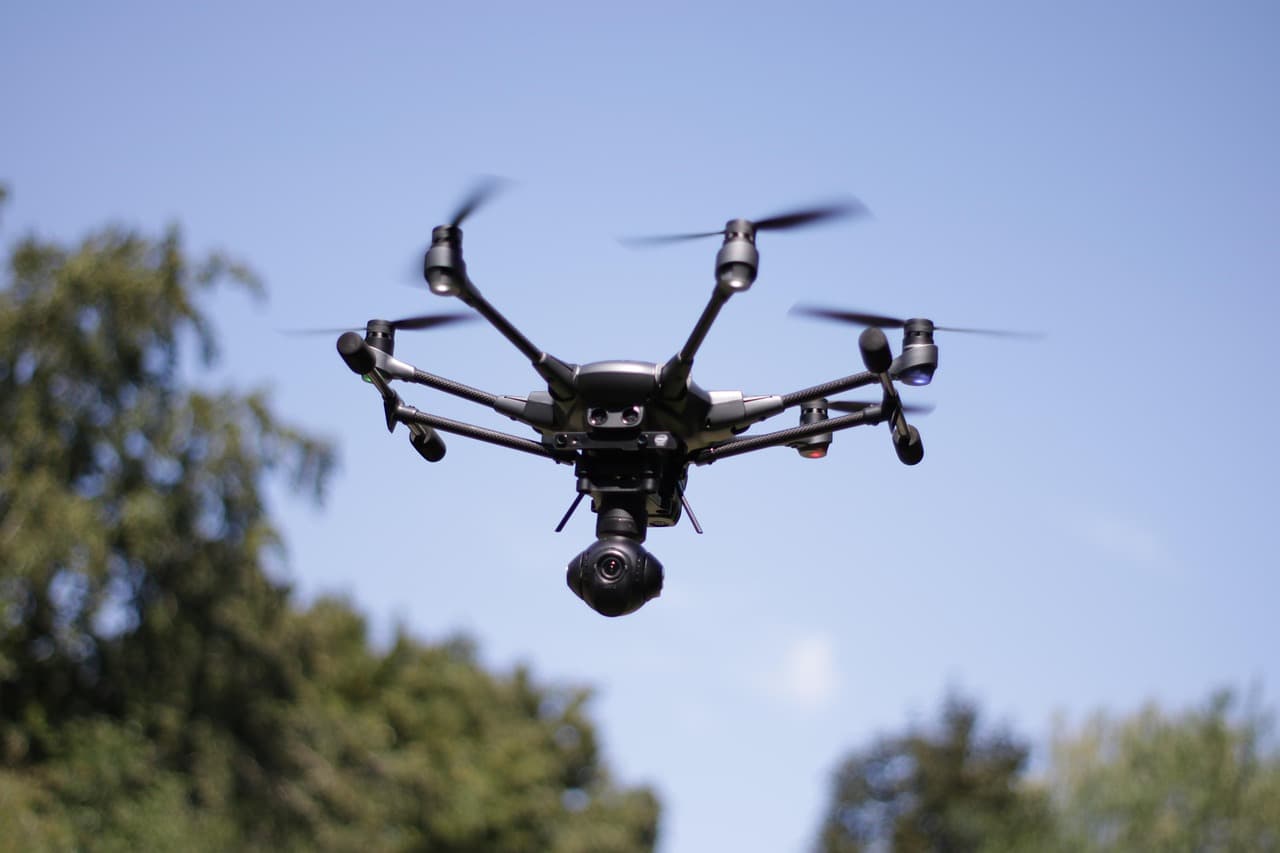
At the end of UK combat operations in Helmand in 2014, 99.2 per cent of British personnel treated at the Role 3 hospital at Camp Bastion survived [1]. That figure, and the American data behind the "golden hour" evacuation mandate, became the founding story of modern trauma care: stop the bleeding, get the casualty to a surgeon quickly, and almost everyone lives. Twelve years later, on the front lines of Ukraine, casualties routinely wait not one hour but fifteen, thirty, sometimes several days for evacuation, because anything that moves near the front is hunted by drones [2, 3, 4]. Tourniquets applied in the first minutes after wounding are often still in place when the casualty finally reaches a surgeon, and by then the limb beneath them is frequently beyond saving.
Against this backdrop, the American College of Surgeons made one of the most significant structural changes of the eleventh edition of Advanced Trauma Life Support. "Injury in Combat Zones and Austere Environments", previously an appendix that many candidates skimmed or skipped, was updated and moved into the main body of the manual [5]. At the same time the primary survey acquired a new first letter: ABCDE became xABCDE, recognising that for some patients rapid control of exsanguinating external haemorrhage comes before the airway [5]. ATLS reaches more than 50,000 learners a year in over 80 countries, so these are not minor editorial choices [5].
This post argues that the promotion of the chapter is overdue, but that its deepest lesson is an uncomfortable one for a course built on algorithms. In austere and hostile settings, time is a variable rather than a constant, and a protocol designed for one tempo of war can harm patients in another.
What the chapter is really asking of you
Strip away the military vocabulary and the chapter makes a small number of demanding claims. An austere environment is one in which the things trauma care depends on, such as clean water, electricity, a fixed or mobile treatment facility, diagnostics and trained colleagues, are degraded or denied, often for long periods. A hostile environment adds a threat to the clinician as well as to the patient. In both, treatment priorities are set by the environment and the relative risk to everyone present, not by the injury pattern alone.
The practical instruction that follows is to take stock of what is actually available and adapt it to meet the goals of ATLS, rather than abandoning those goals because the usual tools are missing. Preparation, planning and communication are presented as clinical skills rather than administrative chores. The most sobering message is that any location can become austere or hostile. That includes a city-centre emergency department after a bombing, a hospital whose IT systems have been taken down by a cyber-attack, or a district general hospital receiving more casualties than it has surgeons.
The chapter also sits deliberately alongside military doctrine, principally Tactical Combat Casualty Care (TCCC), whose phased approach separates care under direct threat from care once the threat has been suppressed. The logic is simple and brutal: under fire, the most important clinical intervention may be to remove the casualty and the rescuer from danger and to control catastrophic bleeding, and very little else.
The assumption hiding inside the "x"
The evidence that justified putting haemorrhage control first is strong. Eastridge and colleagues reviewed 4,596 US battlefield deaths between 2001 and 2011 and found that 87.3 per cent occurred before the casualty reached a medical treatment facility; of those pre-hospital deaths, 24.3 per cent were judged potentially survivable, and haemorrhage accounted for around nine in ten of the potentially survivable deaths [6]. Kragh's work in Baghdad showed that survival was markedly better when limb tourniquets were applied early, before the onset of shock [7].
But the same wars supplied a second, less discussed ingredient. When Defense Secretary Robert Gates mandated helicopter evacuation of critically injured casualties within 60 minutes in 2009, median transport time in Afghanistan fell from 90 to 43 minutes and the case fatality rate fell from 13.7 to 7.6 per cent, in an analysis of more than 21,000 casualties [8]. The tourniquet's excellent safety record in Iraq and Afghanistan was inseparable from that speed. As Patterson and colleagues point out, the evidence base underpinning NATO and US practice came from counter-insurgency campaigns in which transport to care rarely exceeded an hour and casualty numbers rarely overwhelmed the system [9]. The "x" saves lives, but only if you get them out fast.
The tourniquet reckoning
Ukraine has shown how difficult that can be. In a 2024 review led by Frank Butler, one of the founders of TCCC, and John Holcomb, the authors described casualties enduring evacuation delays of up to 21 hours, with prolonged tourniquet application leading to amputation, compartment syndrome and acute kidney injury, and argued that many tourniquets had been applied to wounds that never needed one [10]. Ukrainian surgeons working at forward surgical teams reported 196 cases of post-tourniquet syndrome in 2024. In severely injured patients the mean tourniquet time was 14.9 hours, with a range of 2 to 96 hours; about 70 per cent of the injuries were caused by first-person-view drones; and 64 per cent of affected patients needed amputation above the tourniquet site [2]. A further series from a forward surgical facility found that longer tourniquet times increased the need for dialysis after reperfusion, which in turn increased the likelihood of death [11].
The scale is contested. Captain Stevens, a retired US Navy medical officer and himself one of the original TCCC authors, has suggested that as many as 75,000 of Ukraine's estimated 100,000 wartime amputations may be linked to prolonged or unnecessary tourniquet use [12, 13]. That figure is an estimate drawn from clinicians' accounts rather than a registry, and it should be treated with real caution. Even so, the direction of travel is not seriously disputed.
Doctrine has moved. A Committee on TCCC working group, with NATO and partner-nation input, proposed Change 25-2, published in the spring 2026 issue of the Journal of Special Operations Medicine and reflected in the May 2026 TCCC guidelines [14, 15]. Non-medical personnel are now expected to reassess a tourniquet within two hours; "replacement" has been renamed "repositioning"; conversion beyond two hours is limited to medical personnel; prehospital conversion after about six hours is generally not advised; and a failed conversion attempt does not reset the ischaemic clock [14]. The US Joint Trauma System now teaches explicitly who does not need a tourniquet [16]. And at the SOMA 2026 conference, Ukraine's 3rd Army Corps reported that training every service member to combat lifesaver level raised successful tourniquet conversion to almost 99 per cent, while noting that around 90 per cent of evacuations within the unit are now performed by ground robots and that evacuation can take anywhere from hours to weeks [3].
The strongest case for keeping it simple
The counterargument deserves a fair hearing, because it is a serious one. Tourniquets were actively discouraged in military and civilian teaching until the 1990s, and decades of preventable deaths from limb haemorrhage were the price. The clarity of "apply it early, apply it high" was hard won, and it works under the cognitive load of a firefight. Adding reassessment windows, conversion rules and judgement about which bleeding counts as life-threatening risks reintroducing exactly the hesitation that once killed people.
There is also a statistical trap. Amputees are visible; the casualties who would have bled to death without an over-applied tourniquet are not, because they are alive. Every unnecessary amputation is a tragedy, but a doctrine that converts some deaths into amputations is not obviously a failed doctrine. Finally, most NHS trauma patients reach hospital well within an hour, so a civilian course might reasonably argue that the Ukrainian problem is not its problem.
The resolution is not to retreat from early haemorrhage control. It is to pair "apply early" with "reassess on a clock". The real lesson of the chapter is that every intervention has a time dimension, and that the safe duration of a treatment depends on the system that follows it.
Hospitals are no longer behind the lines
ATLS teaches scene safety as the first step of any response. The austere chapter extends that principle to whole facilities, and the data justify the extension. The World Health Organization's Surveillance System for Attacks on Health Care has verified more than 10,400 attacks in 29 countries and territories since 2018, with approximately 5,700 deaths and 8,500 injuries [17]. Between January and mid-August 2026 alone it recorded 914 attacks, causing 911 deaths and 1,486 injuries, with most incidents in Ukraine, Lebanon and the occupied Palestinian territory [17]. All 36 hospitals in the Gaza Strip had sustained damage by the end of 2025; in Sudan, 37 per cent of health facilities were non-functional in 2026 [17]. In Ukraine, the WHO country office reports around 2,900 attacks on the health system since the full-scale invasion and a 20 per cent rise in 2025 compared with the previous year [18]. According to WHO, not one of the verified incidents has yet entered an accountability process [17].
The implication for planners is stark: hospitals will never be far enough from the fighting to be safe [1]. Austere care can no longer be thought of as something that happens a long way from the operating theatre.
What should we actually do in these perilous times?
Treat time as a vital sign. Record the time of every tourniquet, pelvic binder and splint, and know who will reassess it and when. Ask what your local evacuation reality actually is: rural roads, island transfers, a major incident that saturates ambulance capacity. The golden hour is a property of a system, not of a patient.
Rebuild prolonged-care skills. Hypothermia prevention, analgesia, pressure-area care, compartment monitoring, fluid balance and urine output are unglamorous competencies that atrophy in a system built on short transfers. In Ukraine they decide outcomes.
Practise improvisation within the ATLS goals. The chapter's message is not "abandon the primary survey"; it is "achieve its aims with what you have". Simulation that removes the CT scanner, the second consultant or the helicopter is cheap and revealing.
Rehearse mass-casualty triage, including its ethics. In overwhelmed systems the aim shifts to the greatest good for the greatest number. Military analysts have also raised "reverse triage", prioritising less severely injured personnel who can return to duty, and openly questioned whether society would tolerate it [1]. These are conversations better held before the event than during it.
Press for system preparedness. The 2025 Strategic Defence Review prompted joint work between the Ministry of Defence, the Department of Health and Social Care and the NHS; an NHS England workshop in February 2026 focused on the role of the NHS in major conflict [19]. A ministerial answer on 7 September 2026 said that work with allies through the NATO Medical Action Plan is addressing regulatory frameworks, workforce shortages, mass casualty planning, patient evacuation and medical logistics [20]. Norway has gone further, instructing its hospitals and municipalities in May 2026 to plan for 7,000 beds for military and civilian war casualties [21]. A RUSI analysis contrasted Afghanistan's peak of roughly 160 killed and 500 injured per month with the hundreds of casualties per day that a state-on-state war could generate, and estimated that the UK's Role 4 receiving hospital might realistically take no more than about 100 casualties a week under current pressures [1]. In June 2026 the BMA's Annual Representative Meeting passed a motion calling for a comprehensive review of health system preparedness for violent conflict, warning that the NHS lacks capacity even for day-to-day care [22].
There is a legitimate counterpoint here too. Preparing for war competes with an NHS already struggling to meet everyday demand, and talk of "warfighting" risks securitising health care in ways that may not serve patients. The best answer is that most of the measures above are dual-use: the same skills and plans serve a terrorist attack, a major rail crash, a pandemic surge or a prolonged regional blackout.
What this means for your ATLS exam
The exam tests ATLS doctrine, so anchor your answers in the eleventh-edition manual rather than in TCCC or in news coverage. In particular:
Know xABCDE and why it exists. Exsanguinating external haemorrhage is controlled first, before airway, when it is the immediate threat to life [5].
Know the difference between austere and hostile environments, and that treatment priorities depend on the environment and the relative risk to patient and provider. Safety of the team comes first.
Tourniquets: be clear on the indication (life-threatening extremity haemorrhage not controlled by direct pressure), the need to document the time of application, the need for analgesia, and the risk of ischaemic injury with prolonged use. Do not import the 2026 TCCC conversion algorithm into an ATLS answer unless the question explicitly asks about it.
Mass-casualty principles: when resources are overwhelmed, triage aims to do the most good for the most patients, and categories change as resources change.
- Adapt, don't abandon: if a question removes equipment or staff, the right answer usually preserves the goal of the primary survey and achieves it by other means.
You can test yourself on haemorrhage control, triage and primary-survey priorities in the ATLSMCQ question bank. The best preparation for austere medicine, however, is to understand why each step of the algorithm exists, so that you can still serve its purpose when the tools that usually support it are gone.
References
1. Arnold E, Horne S. How would the UK's healthcare system cope with war? RUSI Commentary, 4 March 2024. https://www.rusi.org/explore-our-research/publications/commentary/how-would-uks-healthcare-system-cope-war
2. Mikheiev I, Nikolaiev M, Kuziv R, Rusanov I, Zhovtonozhko O. Post-tourniquet syndrome in military personnel during armed conflicts in Ukraine. CPM Military Medicine, 11 September 2025. https://military-medicine.com/post-tourniquet-syndrome-in-military-personnel-during-armed-conflicts-in-ukraine/
3. Razom for Ukraine. Ukrainian tactical med research named best at SOMA 2026 conference. 2026. https://www.razomforukraine.org/?p=41048
4. Price J. As attack drones grow more common in warfare, it's harder for medics to treat battlefield injuries. American Homefront Project / Texas Standard, 18 May 2026. https://texasstandard.org/stories/as-attack-drones-grow-more-common-in-warfare-its-harder-for-medics-to-treat-battlefield-injuries/
5. American College of Surgeons. Trauma care gets major upgrade with launch of ATLS 11. ACS Brief, 16 September 2025. https://www.facs.org/for-medical-professionals/news-publications/news-and-articles/acs-brief/september-16-2025-issue/trauma-care-gets-major-upgrade-with-launch-of-atls-11/
6. Eastridge BJ, Mabry RL, Seguin P, et al. Death on the battlefield (2001–2011): implications for the future of combat casualty care. J Trauma Acute Care Surg. 2012;73(6 Suppl 5):S431–7. doi:10.1097/TA.0b013e3182755dcc https://doi.org/10.1097/TA.0b013e3182755dcc
7. Kragh JF Jr, Walters TJ, Baer DG, et al. Survival with emergency tourniquet use to stop bleeding in major limb trauma. Ann Surg. 2009;249(1):1–7. doi:10.1097/SLA.0b013e31818842ba https://doi.org/10.1097/SLA.0b013e31818842ba
8. Kotwal RS, Howard JT, Orman JA, et al. The effect of a golden hour policy on the morbidity and mortality of combat casualties. JAMA Surg. 2016;151(1):15–24. doi:10.1001/jamasurg.2015.3104 https://doi.org/10.1001/jamasurg.2015.3104
9. Patterson JL, Bryan RT, Turconi M, et al. Life over limb: why not both? Revisiting tourniquet practices based on lessons learned from the war in Ukraine. J Spec Oper Med. 2024;24(1):18–25. https://www.jsomonline.org/SharedScience/2024118Patterson.pdf
10. Butler F, Holcomb JB, Dorlac W, et al. Who needs a tourniquet? And who does not? Lessons learned from a review of tourniquet use in the Russo-Ukrainian war. J Trauma Acute Care Surg. 2024;97(2S Suppl 1):S45–S54. doi:10.1097/TA.0000000000004395 https://doi.org/10.1097/TA.0000000000004395
11. Lukiianchuk V, Russo RM, Butler FK, Holcomb JB, et al. Morbidity and mortality associated with ischemia-reperfusion injury after prolonged tourniquet use. J Trauma Acute Care Surg. https://scholar.usuhs.edu/en/publications/morbidity-and-mortality-associated-with-ischemia-reperfusion-inju/
12. Stevens RA, Baker MS, Zubach OB, Samotowka M. Misuse of tourniquets in Ukraine may be costing more lives and limbs than they save. Mil Med. 2024;189(11–12):304–308. https://pubmed.ncbi.nlm.nih.gov/38242075/
13. The Telegraph. 'Cult' of tourniquets causing thousands of unnecessary amputations and deaths in Ukraine, say surgeons. August 2025 (syndicated via Yahoo News). https://www.yahoo.com/news/articles/cult-tourniquets-causing-thousands-unnecessary-151520303.html
14. Committee on Tactical Combat Casualty Care. Standardizing tourniquet reassessment and conversion across TCCC tiers: TCCC Guidelines Proposed Change 25-2. J Spec Oper Med. 2026;26(1). doi:10.55460/J.Spec.Oper.Med.2026.M4V1-O3Y7 https://jsomonline.org/product/standardizing-tourniquet-reassessment-and-conversion-across-tccc-tiers-tccc-guidelines-proposed-change-25-2/
15. Committee on Tactical Combat Casualty Care. TCCC Guidelines, 1 May 2026; summarised in Wilderness Medicine Updates, Fast Push #5 – TCCC Tourniquet Update. https://wildernessmedicineupdates.buzzsprout.com/2121343/episodes/19697358-fast-push-5-tccc-tourniquet-update
16. Joint Trauma System. Save lives: learn when and how to properly use tourniquets. US Defense Health Agency, 2025. https://jts.health.mil/index.cfm/about/news/2025/save_lives_learn_when_and_how_to_properly_use_tourniquets
17. United Nations. WHO – attacks on health care: press briefing by Altaf Musani, Director of Humanitarian and Disaster Management, WHO. Geneva, 14 August 2026. UNifeed. See also AFP report, Oman Observer, 14 August 2026: https://www.omanobserver.om/ampArticle/1194479 https://media.un.org/unifeed/en/asset/d361/d3617503
18. Interfax-Ukraine. Since start of war, 239 medics and patients killed in 2,900 attacks on Ukraine's healthcare system – WHO. 8 April 2026. https://interfax.com.ua/news/general/1157690.html
19. Allison G. MoD reviewing UK health capacity for wartime needs. UK Defence Journal, 15 March 2026. https://ukdefencejournal.org.uk/mod-reviewing-uk-health-capacity-for-wartime-needs/
20. UK Parliament. Written question: Armed Forces: Health Services (Strategic Defence Review recommendation 57). Answered by Calvin Bailey MP, Ministry of Defence, 7 September 2026. https://www.parallelparliament.co.uk/question/22991/armed-forces-health-services
21. Norwegian Ministry of Health and Care Services and Ministry of Defence. The Government asks hospitals and municipalities to update health emergency preparedness plans. 21 May 2026. https://www.regjeringen.no/en/whats-new/the-government-asks-hospitals-and-municipalities-to-update-health-emergency-preparedness-plans/id3160692/
22. British Medical Association. Government must be better prepared for violent conflicts to protect patients and staff, says BMA. Press release, 24 June 2026. https://www.bma.org.uk/bma-media-centre/government-must-be-better-prepared-for-violent-conflicts-to-protect-patients-and-staff-says-bma